
The honest answer depends on how much of the thyroid is removed. This guide explains it in simple words, so you know what to expect before and after your operation.
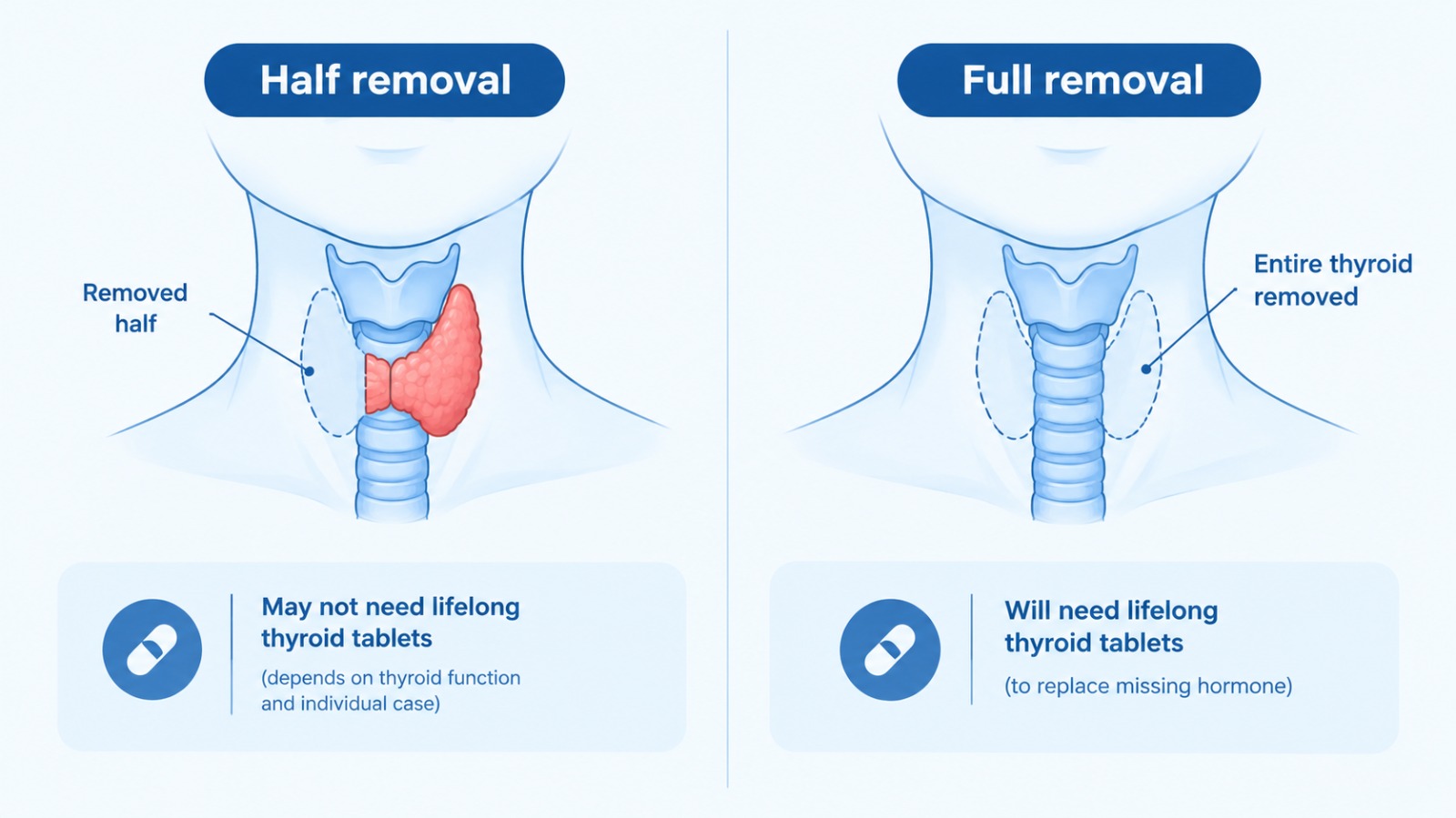
After a total thyroidectomy (the whole thyroid is removed), you need a thyroid hormone tablet every day for life. After a hemithyroidectomy (half is removed), many people need no tablets, because the other half keeps working. Some need a small dose. A blood test a few weeks after surgery shows which group you are in.
Why Do Some People Need Thyroid Tablets After Surgery?
The thyroid is a small, butterfly-shaped gland in the front of your neck. It makes hormones that control how fast your body uses energy. These hormones affect your heart rate, body temperature, weight, mood and energy.
When surgeons remove part or all of the thyroid, your body may make less of this hormone. The tablet simply replaces what your thyroid used to make. It is not a treatment for a disease. It is the same hormone, in tablet form.
The tablet is called levothyroxine. Doctors have used it safely for many decades. When the dose is right, most people feel completely normal.
If you want to understand what happens when the thyroid makes too little or too much hormone, read our guide on hypothyroidism vs hyperthyroidism.
Half Removal vs Full Removal: Who Needs Tablets?
| Operation | What Is Removed | Tablets After Surgery? |
| Hemithyroidectomy (lobectomy) | One half of the thyroid | Many people need none. Some need a small dose. |
| Total thyroidectomy | The whole thyroid | Yes, every day for life |
| Total thyroidectomy with neck lymph node removal | Whole thyroid and nearby lymph nodes | Yes, every day for life |
The reason is simple. With half a thyroid left, your body can often make enough hormones on its own. With no thyroid left, it cannot make any. You can read more about each operation on our page about thyroid surgery in Ahmedabad.
Why Some People With Half Removal Still Need Tablets
Having half the thyroid removed does not guarantee that you will be tablet-free. Your surgeon cannot always predict it before the operation. Some things make tablets more likely:
- The remaining half was already weak or underactive before surgery
- Blood tests showed a high TSH level before the operation
- You have a long-term thyroid inflammation, such as Hashimoto's thyroiditis
- A large part of the gland was removed along with the lump
None of these is a reason to worry. They only mean your doctor will watch your blood tests more closely.
What Happens After Surgery: Blood Tests and Timeline
Your doctor uses a blood test called TSH to see whether your body has enough thyroid hormone.
| When | What Usually Happens |
| Right after total thyroidectomy | Tablets are started, often from the first day after surgery |
| Right after hemithyroidectomy | Often no tablet at first, and your doctor waits for a blood test |
| About 6 to 8 weeks later | First TSH blood test, and the dose is adjusted if needed |
| Next few months | Repeat tests until your levels settle |
| Long term | Usually a blood test once or twice a year |
The dose is not the same for everyone. It depends on your body weight, your age and the type of surgery. It may also change over the years. Needing a dose change is normal and not a sign that something has gone wrong.
How to Take Thyroid Tablets the Right Way
Thyroid tablets work best when you take them the same way every day:
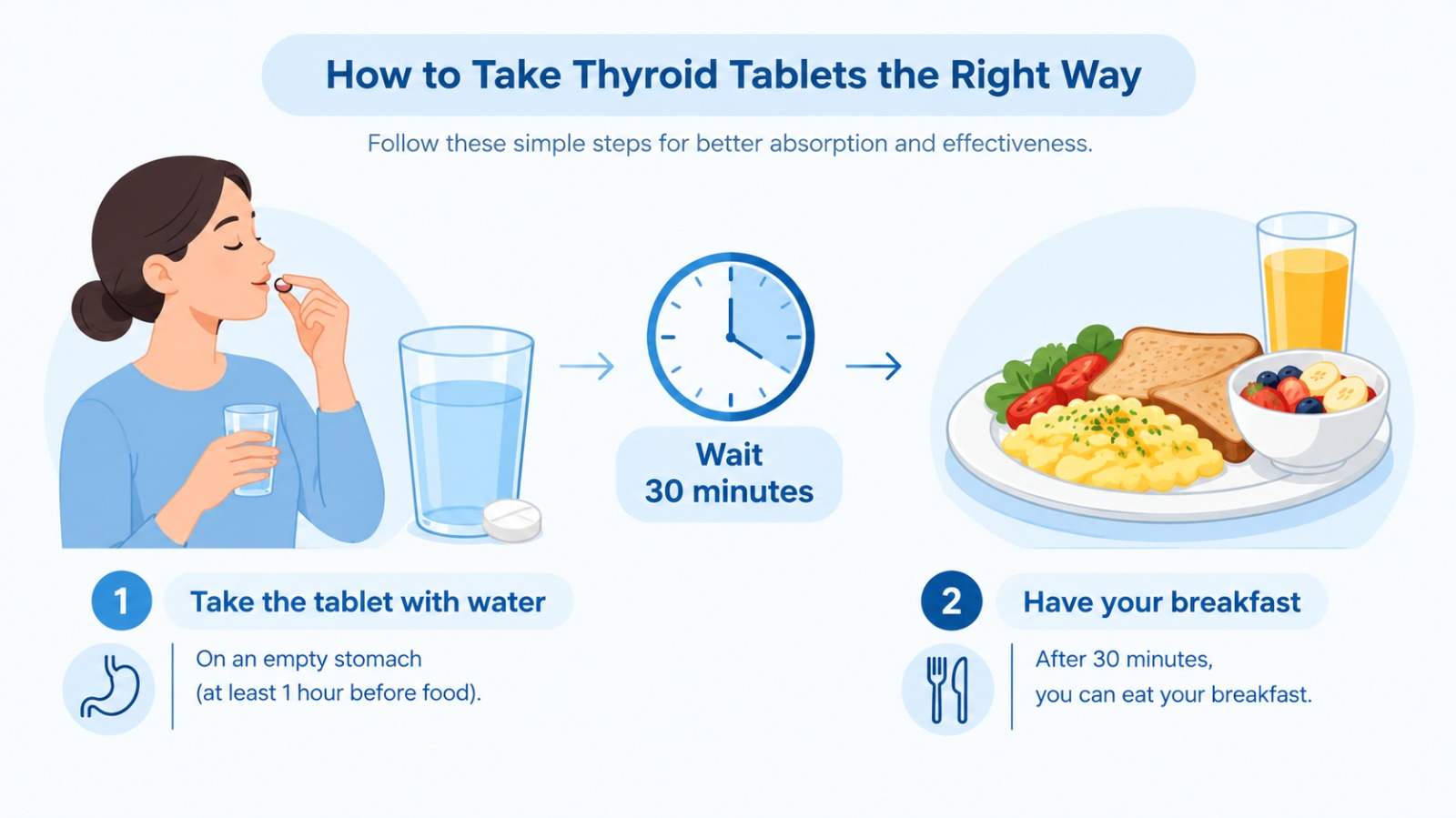
- Take the tablet on an empty stomach, with plain water, about 30 to 60 minutes before breakfast
- Take it at the same time every day, so your levels stay steady
- Keep calcium, iron tablets and antacids at least 4 hours away from it, because they reduce how much your body absorbs
- Wait about an hour after the tablet before drinking tea or coffee
- If you miss a dose, take it when you remember, and never double the next one
- Never stop the tablet on your own, even when you feel well
If you take a new medicine or supplement, tell your doctor. Some can change how well your tablet works.
Signs Your Dose May Need a Change
Blood tests are the best guide, but your body also gives clues.
| Dose Too Low | Dose Too High |
| Feeling tired or slow | Racing or pounding heartbeat |
| Weight gain | Weight loss without trying |
| Feeling cold all the time | Feeling hot and sweaty |
| Dry skin and hair | Shaky hands and anxiety |
| Constipation and low mood | Trouble sleeping |
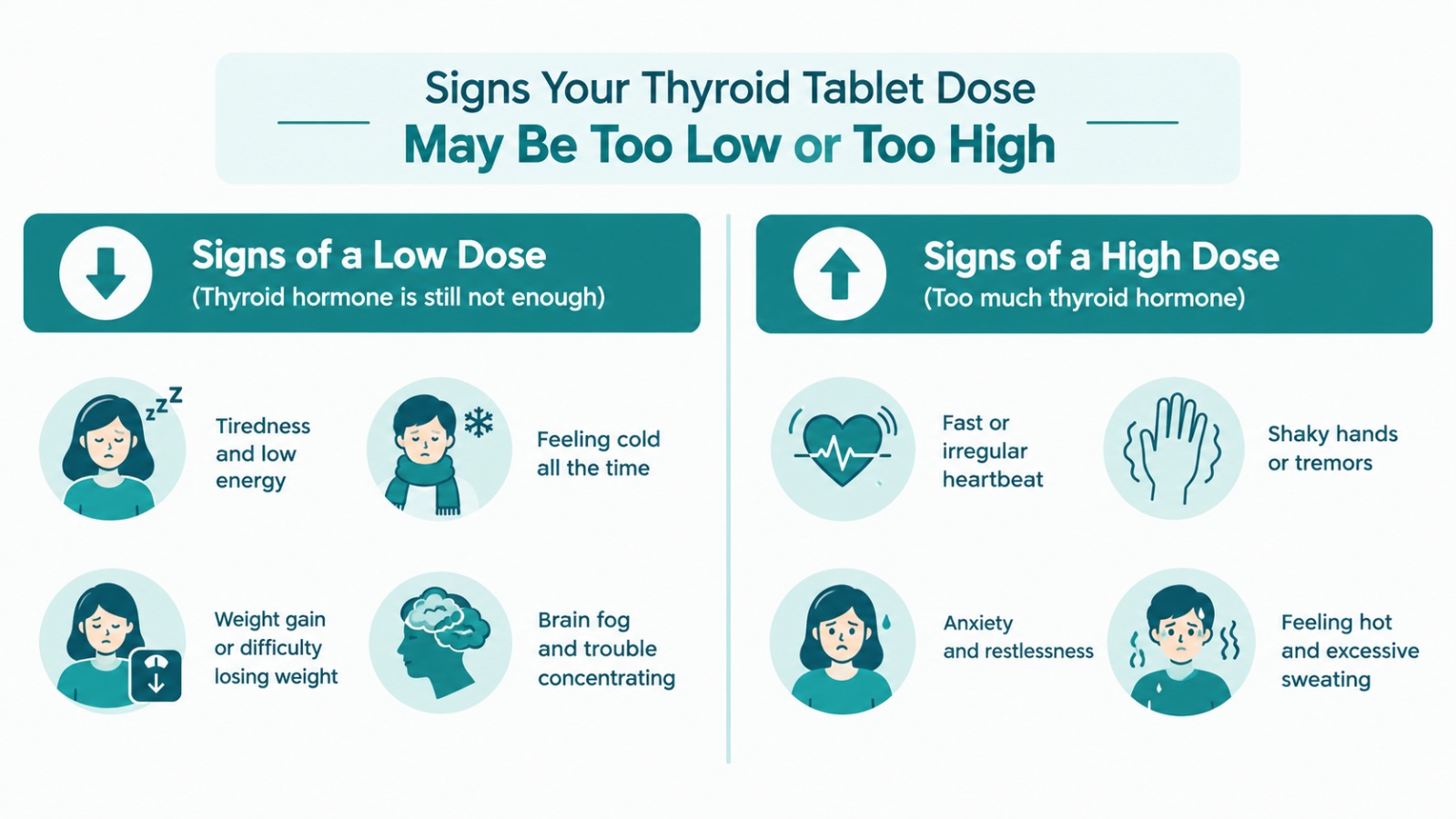
Do not change the dose yourself. If you notice these signs, ask for a TSH test and speak to your doctor.
Do Not Mix Up Thyroid Tablets and Calcium Tablets
After a total thyroidectomy, some people also need calcium tablets for a while. This happens because the small parathyroid glands, which control calcium, sit next to the thyroid and may be affected during surgery.
These are two different tablets for two different jobs. Calcium tablets are usually needed only for some time. Thyroid tablets are for life after a total thyroidectomy. Remember to keep them apart for at least 4 hours.
Questions to Ask Your Surgeon Before the Operation
Before surgery, a short talk with your surgeon can remove most of your fear. You can ask:
- Will you remove half or the whole thyroid, and why?
- Is there a chance I will need tablets even if only half is removed?
- When will my first blood test be?
- Who will adjust my dose after surgery, the surgeon or an endocrinologist?
- Will I also need calcium tablets for some time?
If you are looking for a thyroid specialist in Ahmedabad, you can read about Dr. Alpesh Patel and the thyroid surgeries performed at our hospital.
Frequently asked questions
Do I need thyroid tablets for life after thyroid surgery?+
Will I need tablets if only half of my thyroid is removed?+
What is the thyroid tablet called?+
When should I take my thyroid tablet?+
What happens if I stop taking thyroid tablets after a total thyroidectomy?+
How often will I need blood tests?+
Can the thyroid dose change over time?+
Conclusion
Whether you need thyroid tablets for life depends on one thing: how much of the thyroid is removed. After a total thyroidectomy, a daily tablet is needed for life. After removal of half, many people need nothing, and some need a small dose. In every case, blood tests guide the plan, and the right dose lets you live a normal, active life. Ask your questions early, take your tablet the same way every day and keep your follow-up visits. If you want a clear opinion on your own reports, you can contact us to book a consultation. At Tirtham Surgical Hospital, we explain what your surgery means for your hormone tablets in plain words, long before you go to the operation theatre.
Next step
Plan your consultation
Share your reports on WhatsApp for a guided opinion, or visit us on Science City Road for an in-person examination.