Gangrene means body tissue has died usually because its blood supply was cut off, an infection took hold, or both. It most often affects the toes, feet, fingers and limbs, and it is one of the few conditions where hours genuinely matter: some forms spread rapidly and can become life-threatening. The single most important thing to do is act fast early treatment is what saves limbs, and lives.
At Tirtham Surgical Hospital on Science City Road, gangrene treatment in Ahmedabad is handled with urgency: removing dead tissue, controlling the infection, restoring blood flow where possible, and preserving as many healthy limbs as we can. Dr. Alpesh Patel (MS) and team provide this 24×7. Below is a clear guide to the types of gangrene, the warning signs that mean emergency, and how good, prompt care saves what can be saved.
What gangrene is
Living tissue needs a constant blood supply to deliver oxygen and fight infection. When blood flow is cut off by hardened or blocked arteries, diabetes, a severe injury, or an overwhelming infection the tissue starves and dies. Bacteria can then invade the dead tissue and spread, which is what makes some gangrene so dangerous. Because the affected tissue is already dead, it can't be brought back to life so treatment focuses on removing it, stopping the spread, and protecting the healthy tissue around it.
The three types and why the type decides urgency
Knowing the type matters, because it determines how quickly you must act.
| Type | Cause & features | Urgency |
| Dry gangrene | Chronic poor blood flow (diabetes, artery disease); tissue dries, shrivels, turns black; little infection | Serious, but slower needs prompt vascular assessment (can turn wet if infected) |
| Wet gangrene | Sudden blood-flow loss plus infection; swelling, blisters, foul discharge; spreads fast | Emergency high risk of sepsis |
| Gas gangrene | Clostridial bacteria producing gas in tissue; crackling under the skin, severe pain | Emergency spreads rapidly, life-threatening |
A dry, black toe from poor circulation is treated differently and less frantically than a swollen, foul-smelling, spreading wet gangrene, which needs surgery within hours.
Warning signs and when it's an emergency
Signs that tissue is dying, or infection is spreading, include:
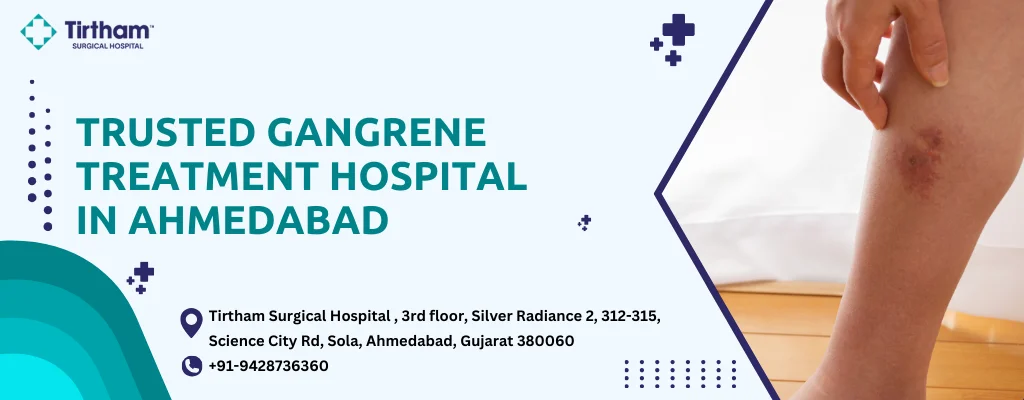
- Skin turning pale, then blue, purple, bronze, or black,
- Swelling, blisters, and a foul-smelling ("rotten") discharge,
- A crackling sensation under the skin (gas gangrene),
- Sudden severe pain followed by numbness and a cold, shiny look,
- Fever, a racing heartbeat, low blood pressure, dizziness or confusion signs the infection is spreading into the bloodstream (sepsis).
Any of the last group or a rapidly spreading, foul, blistering wound is a medical emergency. Reach the nearest emergency facility immediately; gangrene with sepsis is life-threatening and needs treatment without delay.
What causes gangrene
Anything that reduces blood flow or invites serious infection raises the risk. The commonest are diabetes (damaged vessels and poor healing), peripheral artery disease and atherosclerosis (narrowed, hardened arteries), severe injury, burns or frostbite, and a weakened immune system (from chemotherapy, HIV or long-term steroids). Smoking and obesity worsen circulation and add to the risk. Often gangrene is the end-point of a neglected wound which is why treating an ulcer, a diabetic foot, or a spreading infection early prevents it → Diabetic foot · Cellulitis.
How gangrene is diagnosed
A Gangrene doctor in Ahmedabad can often recognise gangrene on sight and examination, then works quickly to gauge its type and extent: blood tests (for infection and organ effects), a tissue or fluid culture (to identify the bacteria and target antibiotics), and imaging (X-ray, CT or MRI) to see how deep the damage goes and whether gas is present. If poor circulation is the cause, an arteriogram or Doppler maps the blocked arteries because restoring blood flow may be part of the treatment. In an emergency, assessment and treatment happen together, without delay.
Treatment saving limb and life
Treatment has three simultaneous goals: remove the dead tissue, stop the infection, and restore blood flow all aimed at saving as much limb and function as possible.
| Treatment | What it does |
| Debridement (surgery) | Removes dead and infected tissue to stop the gangrene spreading the cornerstone |
| Antibiotics | Aggressive, targeted antibiotics to control the infection |
| Restoring blood flow | Angioplasty or bypass surgery to reopen or route around blocked arteries, where circulation is the cause |
| Hyperbaric oxygen (HBOT) | Extra oxygen to help healing and fight anaerobic bacteria useful in gas gangrene |
| Wound care / skin grafts | Advanced dressings and grafts to heal the area once infection is controlled |
| Amputation | Removing the affected part when it can't be saved to stop the spread and save life |
A Gangrene surgeon in ahmedabad acts fast on wet or gas gangrene, because controlling the infection early is what determines the outcome.
Will I need an amputation?
Sometimes but it's a last resort, and when it's needed, the aim is to remove only what's dead or unsalvageable, preserving as much working limb as possible. In severe wet or gas gangrene, an urgent (sometimes staged) amputation can be genuinely life-saving by stopping the infection spreading and even then, limb-preserving approaches are used wherever the situation allows. → Amputation
The honest truth about salvage
Here's the straight version. Tissue that has already died can't be revived so gangrene itself can't be "reversed." What can be done, and done well, is to limit the loss: remove the dead tissue, halt the infection before it spreads, and restore blood flow to the living tissue so it heals. The earlier this happens, the more is saved a black toe caught early may cost only that toe, whereas the same problem left for weeks can threaten the foot, the leg, or life. That's why "act now" isn't alarmism here; it's the difference between a small loss and a large one.
What gangrene treatment costs in Ahmedabad
There's no single figure, because cost tracks the type and severity a limited debridement of a small area is very different from major surgery with vascular procedures, hyperbaric therapy, or intensive care for sepsis. Rather than a misleading number, we assess the situation and give you a clear, case-specific estimate quickly. Importantly, cost also rises the longer gangrene is left, which is another reason to act early. Gangrene treatment is generally covered by cashless mediclaim as urgent, medically necessary care.
Cashless mediclaim is available, and the Tirtham Health Card covers consultations and reports. In an emergency, call us straight away on +91-9428736360 (24×7), or send details on WhatsApp.
Meet your gangrene Surgery specialist Dr. Alpesh Patel
Gangrene is where speed and judgement save limbs recognising the type, acting fast on infection, restoring blood flow, and keeping any tissue loss to the minimum. Dr. Alpesh Patel (MS) brings 18+ years of surgical practice and 22,000+ operations, managing gangrene and severe infection with a salvage-first, act-fast approach.
As a Gangrene Specialist Ahmedabad and a Gangrene Treatment Specialist Ahmedabad and Gangrene Surgery Specialist Ahmedabad for advanced cases his priorities are clear: control the infection urgently, debride only what must go, coordinate vascular input to restore blood flow, and preserve as much functional limb as possible, with honest, timely decisions throughout. → More about Dr. Alpesh Patel
Why patients choose Tirtham
Reasons patients trust this Gangrene Hospital Ahmedabad:
- Fast on a time-critical condition — 24×7 cover, because wet and gas gangrene can't wait.
- Salvage-first — remove only what's dead, restore blood flow, and save as much limb as possible.
- The whole problem was treated — infection, circulation and the underlying cause (often diabetes), at a Gangrene Treatment Hospital Ahmedabad that looks beyond the wound.
- Sepsis taken seriously — prompt, aggressive care when infection is spreading, at a Gangrene Surgery Hospital Ahmedabad set up for emergencies.
- Cashless mediclaim and honest, clear decisions at a frightening time.
Frequently asked questions
Is gangrene a medical emergency?+
It can be, and often is. Wet gangrene (infection with sudden loss of blood flow) and gas gangrene (a rapidly spreading bacterial infection) are emergencies with a serious risk of sepsis and death if not treated urgently. Dry gangrene, from chronic poor circulation, is less immediately dangerous but still needs prompt attention. Any spreading, foul, blistering wound — or fever and confusion — needs emergency care.
Can a limb with gangrene be saved?+
Often, part of it can. Tissue that's already dead can't be revived, but acting fast limits the loss — removing the dead tissue, stopping the infection and restoring blood flow so the living tissue heals. Even severe gas gangrene has been salvaged with early surgery. The earlier gangrene is treated, the more limb and function can be saved.
What's the difference between dry, wet and gas gangrene?+
Dry gangrene comes from chronic poor blood flow — the tissue dries and blackens, with little infection, and progresses slowly. Wet gangrene involves infection plus sudden loss of blood flow — it swells, oozes foul fluid and spreads fast, with a high sepsis risk. Gas gangrene is a clostridial infection producing gas under the skin — it spreads rapidly and is a life-threatening emergency.
Will gangrene mean amputation?+
Not always — many cases are treated with debridement, antibiotics and restoring blood flow, saving the limb. Amputation is a last resort, used when tissue can't be saved or to stop a dangerous infection spreading. When it's needed, only the dead or unsalvageable part is removed, preserving as much functional limb as possible. In severe cases, it can be life-saving.
What causes gangrene, and who's at risk?+
Gangrene results from loss of blood supply, serious infection, or both. The highest risk is with diabetes, peripheral artery disease and atherosclerosis (all reducing blood flow), severe injury, burns or frostbite, and a weakened immune system. Smoking and obesity add to the risk. Often gangrene follows a neglected wound, which is why early treatment of ulcers and infections prevents it.
What does treatment involve?+
The core is surgery to remove the dead tissue (debridement), aggressive antibiotics to control infection, and restoring blood flow (angioplasty or bypass) where poor circulation is the cause. Hyperbaric oxygen helps in some cases, especially gas gangrene, and skin grafts help wounds heal afterwards. Amputation is used only when necessary. The underlying cause is treated alongside.
What does gangrene treatment in Ahmedabad cost?+
There's no single figure — it depends on the type and severity, from a limited debridement to major surgery with vascular procedures or intensive care for sepsis. Cost also rises the longer gangrene is left untreated, so acting early is cheaper as well as safer. Gangrene care is generally covered by cashless mediclaim. We'll give a case-specific estimate after assessing you.
Who is a good Gangrene doctor in ahmedabad?+
A good Gangrene doctor in ahmedabad acts fast, recognises the type, controls infection aggressively, restores blood flow, and keeps any tissue loss to the minimum needed. At Tirtham, Dr. Alpesh Patel (MS) — 18+ years and 22,000+ surgeries, with 24×7 emergency cover — manages gangrene with a salvage-first approach, coordinating vascular input and treating the underlying cause.
Blackening skin or a spreading wound? Act now
Gangrene is one of the few conditions where every hour counts early treatment saves limbs and lives. If you see blackening skin, a swollen foul-smelling wound, or spreading redness with fever, don't wait: call us immediately on +91-9428736360, available 24×7, or head to the nearest emergency facility. For a non-urgent assessment (for example, a dry, stable area of poor circulation), you can send details on WhatsApp or talk to SurgiMitra on +91-9974416665.
Next step
Plan your procedure
Share your reports on WhatsApp for a guided opinion, or visit us on Science City Road for an in-person examination.