This is one of the most common questions before the test, and getting it wrong can cause problems. This guide explains upper GI endoscopy preparation for people with diabetes or blood thinners in simple words, so you know what to ask your doctor.
Do not stop or change your diabetes medicines or blood thinners on your own. Tell the endoscopy team about every medicine you take, well before the test. For many people, a simple look-and-biopsy test can go ahead with little change, but the team may adjust the dose or timing of some medicines. The safe plan depends on your medicine, your health and the type of procedure.
Why Do Medicines Matter Before an Upper GI Endoscopy?
An upper GI endoscopy is a short test in which a thin, flexible tube with a camera is passed through the mouth to look at the food pipe, the stomach and the first part of the small intestine. You can read the basics on our page about upper GI endoscopy in Ahmedabad.
Three things about the test make medicines important:
- Fasting. You must not eat for about 6 to 8 hours, so medicines that lower sugar can cause low sugar.
- Sedation. Some people get a sedative through a vein, which can affect breathing and heart rhythm.
- Biopsies and treatment. A small tissue sample, or a treatment such as stopping bleeding, can cause bleeding in people on blood thinners.
Upper GI Endoscopy and Diabetes
Why fasting is tricky with diabetes
When you take diabetes tablets or insulin and then do not eat, your sugar can fall too low. On the other hand, if you stop your medicines completely, your sugar can rise. Either way, a plan is needed.
Signs of low sugar include shakiness, sweating, sudden hunger, dizziness, a fast heartbeat and confusion. If you notice them while fasting, treat the low sugar as your doctor has taught you, and tell the team right away.
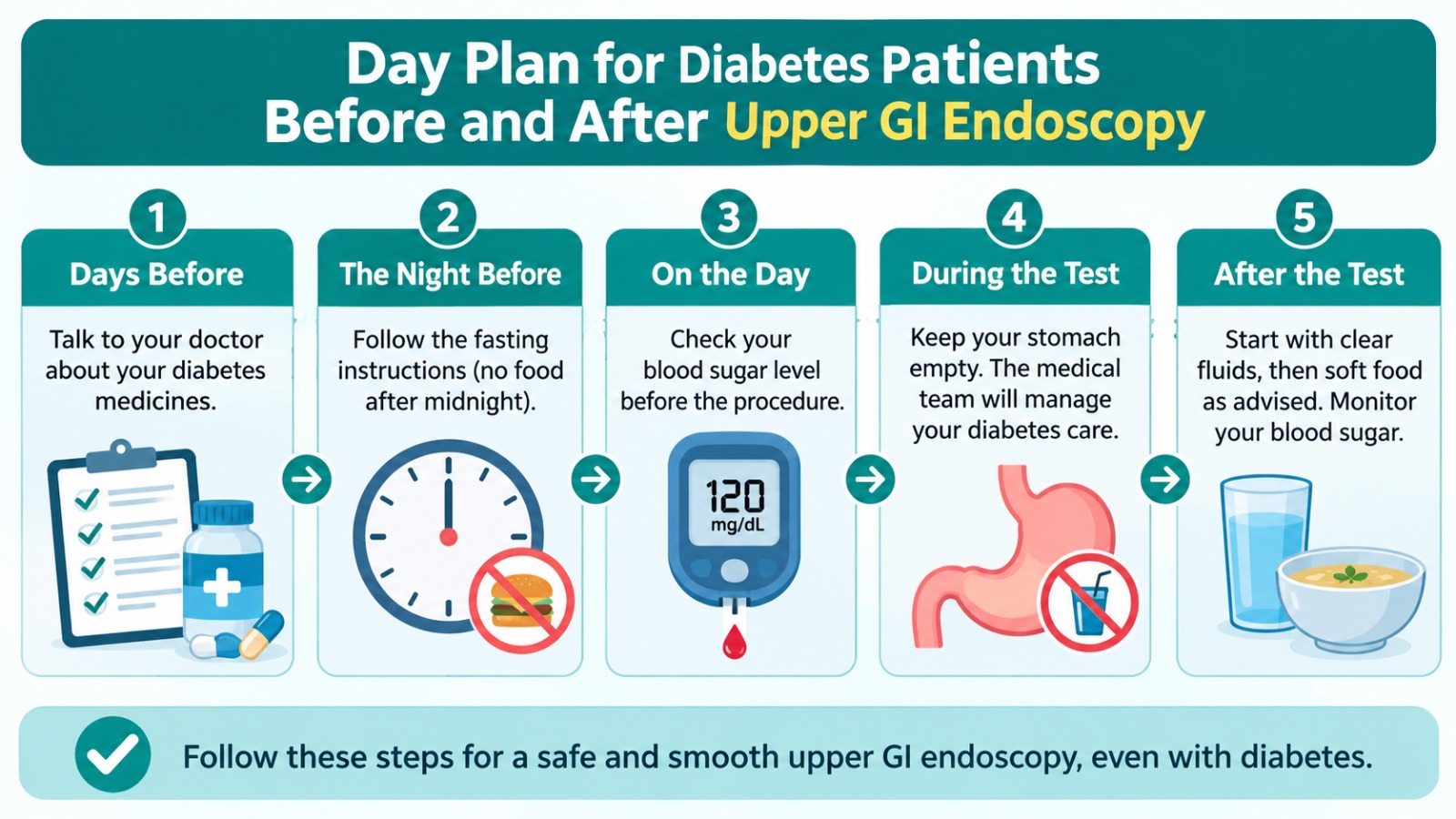
A simple plan for the day
Your own plan will be made by your doctor. This table only shows the usual idea.
| When | What Usually Helps |
| Days before the test | Tell the team you have diabetes and list all your medicines, including insulin |
| Day before | Follow the fasting time you were given, and ask what to do about night-time medicines |
| Morning of the test | Ask whether to take, delay or reduce each diabetes medicine, and check your sugar |
| While fasting | Watch for signs of low sugar, and keep your sugar meter with you |
| After the test | Eat once the team allows it, and restart medicines as advised |
Many hospitals try to book people with diabetes early in the morning, so the fasting time is shorter. It is fair to ask for this.
Newer diabetes and weight-loss injections
Some newer injections for diabetes or weight loss slow down how fast the stomach empties. This can leave food in the stomach even after fasting, which matters when sedation is used. If you use any such injection, tell the team before the test, even if you take it only once a week.
Upper GI Endoscopy and Blood Thinners
Why you should never stop them on your own
People take blood thinners for good reasons. They may have a heart stent, an irregular heartbeat, an artificial valve or a past blood clot. Stopping the medicine without advice can raise the risk of a clot or stroke. At the same time, continuing it without telling the team can raise the risk of bleeding if a biopsy is taken.
So the decision is made by your doctor, based on why you take the medicine and what the test may involve.
| Medicine Group | Common Examples | What the Team Considers |
| Antiplatelet medicines | Aspirin, clopidogrel | Often continued for a simple test, depending on your heart condition |
| Warfarin | Warfarin | May need a blood test (INR) before the procedure |
| Newer blood thinners | Apixaban, rivaroxaban, dabigatran | The timing of the last dose may be adjusted |
This table is only a guide. Never treat it as an instruction.

A simple test is different from a treatment
A look-and-biopsy test carries a smaller bleeding risk than a procedure in which something is cut, stretched or banded. If a treatment is likely, such as removing a polyp, the doctor plans the blood thinner more carefully. For more on what can be found and done during the test, you can also read about the wider range of endoscopic procedures at our hospital.
When bleeding is the reason for the test
If you are on a blood thinner and you notice black, tarry stools or vomiting of blood, do not wait for a planned appointment. Go to a hospital the same day. Tell the doctor which blood thinner you take and when you had the last dose.
Other Medicines Worth Mentioning
Besides diabetes medicines and blood thinners, mention these as well:
Painkillers such as diclofenac and ibuprofen can cause stomach ulcers, so the doctor should know about them. Iron tablets can turn stools black, which can look like bleeding. Acidity medicines and antibiotics can affect some tests for the H. pylori infection, so ask whether any should be paused before the test. Blood pressure and heart medicines are often taken with a small sip of water on the morning of the test, but only if your team has told you so.
What to Bring on the Day
A little preparation makes the day smoother. Carry:
- A written list of all your medicines, with doses and timings
- Your insulin, tablets and sugar meter, if you have diabetes
- Your latest reports, such as an ECG or an INR test, if you take warfarin
- A relative or friend, since you may be advised not to drive after sedation
- Your dentures in a case, because they must be removed for the test
Questions to Ask Before the Test
Asking a few clear questions removes most of the worry. You can ask:
- Which of my medicines should I take, delay or skip on the day, and why?
- Should my insulin or tablet dose change while I am fasting?
- Is it safe to continue my blood thinner for this test?
- Will biopsies or H. pylori testing be done, and does it change my medicine plan?
- Is early-morning timing possible for me?
- When can I eat and restart my medicines after the test?
When to Contact the Hospital
Most people go home the same day and feel normal by the next day. Contact the hospital if you have:
- Severe chest, neck or stomach pain
- Vomiting of blood, or black stools
- Fever
- Difficulty swallowing or breathing
- Signs of very low or very high sugar that do not settle
After sedation, avoid driving, using machines, signing important papers or drinking alcohol for the rest of the day. If you are curious about what an endoscopy can pick up, you can read our article on whether upper GI endoscopy can detect stomach cancer.
Frequently asked questions
Can I have an upper GI endoscopy if I have diabetes?+
Should I take my diabetes medicine before an upper GI endoscopy?+
Should I stop blood thinners before an upper GI endoscopy?+
Can I take aspirin before an endoscopy?+
Can I take my blood pressure medicine on the day?+
What if my sugar drops during fasting?+
Do I need someone with me after the test?+
Conclusion
Having diabetes or taking a blood thinner does not stop you from having an upper GI endoscopy. It only means that the team needs more information and a clear plan. Make a list of your medicines, share it early, never change a dose on your own and ask the questions above. A little preparation protects you from low sugar, bleeding and last-minute delays. If you have an upper GI endoscopy planned and want clear advice about your own medicines, you can contact us to speak with the team, and you can read about Dr. Alpesh Patel, who performs the test. At Tirtham Surgical Hospital, we go through your medicines with you before the test, so that you walk in prepared and not worried.
Next step
Plan your consultation
Share your reports on WhatsApp for a guided opinion, or visit us on Science City Road for an in-person examination.