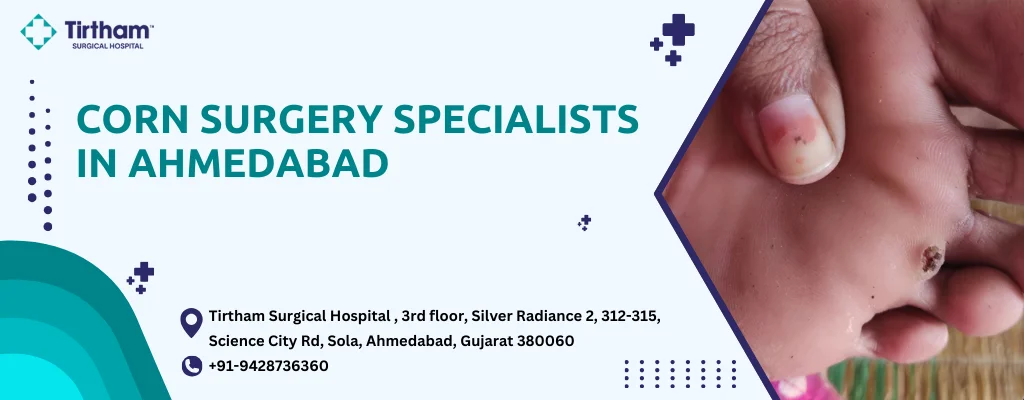
A corn is a small, thickened, cone-shaped patch of hard skin, your foot's protective response to repeated pressure or friction, usually over a bony spot or from ill-fitting shoes. It can feel like walking on a small stone. The good news is simple: because corn is a reaction to pressure, relieving that pressure usually makes it settle and the great majority of corn clear with straightforward measures, no surgery needed.
At Tirtham Surgical Hospital on Science City Road, foot corn treatment in Ahmedabad starts with what actually works footwear advice, padding, salicylic-acid treatment and professional trimming and reserves surgery for the rare corn caused by an underlying bone problem. Dr. Alpesh Patel (MS) and team keep it simple and honest. Below is a clear guide, including an important note for anyone with diabetes.
What a corn is (and how it differs from a callus or wart)
Corns are often confused with calluses and plantar warts — telling them apart matters, because they're treated differently.
| Corn | Callus | Plantar wart | |
| What it is | A small, deep, cone-shaped hard core | A broad area of thickened skin | A viral skin growth |
| Where | Over a bony spot, or between toes | Pressure areas (heel, ball of foot) | Sole of the foot |
| Feels like | Walking on a stone; painful when pressed | Usually painless, just thick | Painful when pinched side-to-side; may have tiny black dots |
| Cause | Pressure/friction | Pressure/friction | Virus (HPV) |
A Foot Corn doctor in Ahmedabad confirms which one it is (occasionally with imaging to exclude a foreign body), so it's treated correctly rather than mistaken for a wart or ulcer.
Why corns form
Corns form wherever the skin is repeatedly squeezed or rubbed. The usual culprits are tight, loose or poorly-fitting shoes (high heels and narrow shoes are common causes), going sockless, foot deformities (a hammer toe, bunion or prominent bone) that create a pressure point, and repetitive pressure from tools or instruments (which can cause corns on the hands). Because it's a pressure problem, the key to lasting relief and to stopping recurrence is removing or redistributing that pressure.
Treatment conservative first, and it usually works
For almost everyone, simple measures resolve a corn problem. Surgery is a last resort.
| Treatment | What it does |
| Better-fitting footwear | Removes the friction/pressure at the source the single most important step |
| Orthotic inserts / padding | Redistribute pressure and cushion the spot and help prevent recurrence |
| Salicylic-acid plasters/creams | Soften and dissolve the hard skin (effective often as good as or better than trimming) not for diabetics |
| Professional trimming (debridement) | A doctor safely pares the corn with a sterile blade sometimes repeated |
| Surgery | Only for a corn caused by an underlying bony problem (see below) |
The honest headline: fix the footwear and the pressure, use a plaster or have it trimmed, and most corns settle with no operation required.
When surgery is needed
Surgery is genuinely rare. It's considered when a corn keeps coming back despite everything, because there's an underlying bony prominence such as a hammer toe or bunion pressing the skin. In that case, a Foot Corn Surgery in Ahmedabad procedure removes the corn and corrects or shaves down the bony prominence causing it (a minor day-care operation under local anaesthetic), so it doesn't simply reform. In other words, surgery treats the cause, not just the corn.
A word for people with diabetes
This part matters. If you have diabetes or poor circulation, corn is not a minor issue to handle yourself. Don't use salicylic-acid products, and never cut or shave a corn reduced sensation and slower healing mean a small lesion can turn into a serious ulcer or infection before you notice. Instead, see a doctor promptly for safe, professional care, and have your feet checked regularly. If you notice any redness, discharge, or a wound that isn't healing, treat it as urgent → Diabetic foot care. Careful, professional foot care is one of the best ways to protect a diabetic foot.
Please don't cut a corn at home
Even without diabetes, it's not safe to shave a corn off with a razor or pedicure blade; it commonly leads to infection, and doesn't fix the underlying pressure anyway. A salicylic-acid plaster (used carefully, avoiding the healthy surrounding skin) and better footwear are the safe home measures; anything more should be done by a professional. If a corn is painful, isn't improving, or gets red and sore, have it looked at rather than attacking it yourself.
What corn treatment costs in Ahmedabad
Corn care is inexpensive. Conservative treatment, a consultation, footwear/orthotic advice, salicylic-acid plasters or a professional trim costs very little and resolves the great majority of corns. In the rare case that surgery is needed (to correct an underlying bony cause), it's a minor day-care procedure under local anaesthetic with a modest cost. Rather than a headline figure, we'll advise the least you need, usually just simple measures and give a clear estimate if a minor procedure is genuinely warranted. Medically indicated surgery is generally covered by cashless mediclaim.
Cashless mediclaim is available where applicable, and the Tirtham Health Card covers consultations. Send a photo or your details on WhatsApp, or reach the team.
Meet your foot corn Surgery specialist Dr. Alpesh Patel
Good corn care is honest and simple, relieving the pressure, treating conservatively, and only operating when there's a bony cause to correct. Dr. Alpesh Patel (MS) brings 18+ years of practice and 22,000+ surgeries, and treats foot corns (and their causes) day in, day out.
As a Foot Corn specialist in Ahmedabad, his approach is practical: identify and relieve the pressure, treat the corn conservatively (footwear, padding, salicylic acid, trimming), take special care with diabetic feet, and reserve surgery for the rare corn driven by an underlying bony prominence correcting the cause so it doesn't return. → More about Dr. Alpesh Patel
Why patients choose Tirtham
Reasons patients trust this Foot Corn treatment hospital in Ahmedabad:
- Conservative first — simple measures that usually work, no unnecessary surgery.
- The cause was treated — recurrent corn traced to a bony prominence and corrected, at a Foot Corn removal hospital in Ahmedabad that looks beyond the corn.
- Diabetic-safe care — professional handling for the feet most at risk.
- Minor, tidy surgery when genuinely needed, at a Foot Corn surgery hospital in Ahmedabad set up for day-care procedures.
- Cashless mediclaim where applicable, and honest, no-fuss advice.
Frequently asked questions
Do corns need surgery?+
Almost never. The great majority of corns clear with conservative measures — better-fitting footwear, orthotic inserts or padding, salicylic-acid plasters, and professional trimming. Surgery is a rare last resort, used only when a corn keeps returning because of an underlying bony prominence (like a hammer toe or bunion). In that case, surgery corrects the bone, not just the corn.
Why do my corns keep coming back?+
Because the pressure that caused them is still there. A corn is your skin's response to friction or pressure, so if the footwear, walking pattern, or an underlying bony prominence isn't addressed, it reforms. Fixing the cause — proper shoes, orthotic inserts, and (rarely) correcting a bony deformity — is what stops corns recurring, not repeatedly removing the corn itself.
Can I treat or cut a corn at home?+
You can safely use a salicylic-acid plaster (carefully, avoiding the healthy skin around it) and switch to better footwear. But never shave a corn off with a razor or pedicure blade — it commonly causes infection and doesn't fix the cause. Anything beyond simple measures should be done by a professional. People with diabetes should not self-treat at all.
How do I tell a corn from a callus or a wart?+
A corn is a small, deep, painful hard core, often over a bony spot or between toes. A callus is a broader area of thickened skin, usually painless. A plantar wart is a viral growth on the sole, often painful when pinched side-to-side and sometimes with tiny black dots. They're treated differently, so it's worth having it identified correctly.
When is corn surgery needed?+
Only rarely — when a corn resists all conservative treatment and keeps returning because of an underlying bony prominence (a hammer toe, bunion, or prominent bone). Surgery then removes the corn and corrects the bony cause, as a minor day-care procedure under local anaesthetic. Without an underlying bony problem, surgery isn't needed and conservative care is the answer.
I have diabetes — what should I do about a corn?+
Be careful and see a doctor. Don't use salicylic-acid products and never cut a corn yourself — with diabetes, reduced sensation and slower healing mean a small corn can become a serious ulcer. Have it treated professionally, check your feet regularly, and seek urgent care for any redness, discharge, or non-healing wound. Professional foot care protects the diabetic foot.
What does foot corn treatment in Ahmedabad cost, and where do I go?+
Conservative treatment — a consultation, footwear advice, plasters or a professional trim — costs very little and resolves most corns. Surgery, only if a bony cause needs correcting, is a modest day-care procedure. A good Foot Corn doctor in Ahmedabad treats conservatively first and is diabetic-aware. At Tirtham, Dr. Alpesh Patel (MS) provides that honest, simple care, with a clear estimate if a minor procedure is needed.
Painful corn? Let's sort it simply
A corn is a small problem with a simple solution usually just relieving the pressure and a little treatment, no surgery. Send us a photo or your details on WhatsApp for a guided opinion, and we'll advise the easiest way to sort it. Reach us on call or WhatsApp at +91-9428736360, any time. If you have diabetes, please don't self-treat let us handle it safely.
Next step
Plan your procedure
Share your reports on WhatsApp for a guided opinion, or visit us on Science City Road for an in-person examination.