But a hernia can change in a few hours. The bulge gets stuck, the pain turns sharp, and what was a small problem becomes an emergency. This guide explains the warning signs in simple words, so you know when waiting is safe and when it is not.
A trapped hernia is an emergency if the bulge is hard, very painful, red or dark, and does not go back in, especially with vomiting, a swollen belly, fever or no passing of gas or stool. Do not wait for the pain to settle. Go to the nearest hospital with an emergency surgical team right away. A bulge that is stuck but only mildly painful still needs care the same day.
What Does a "Trapped" Hernia Mean?
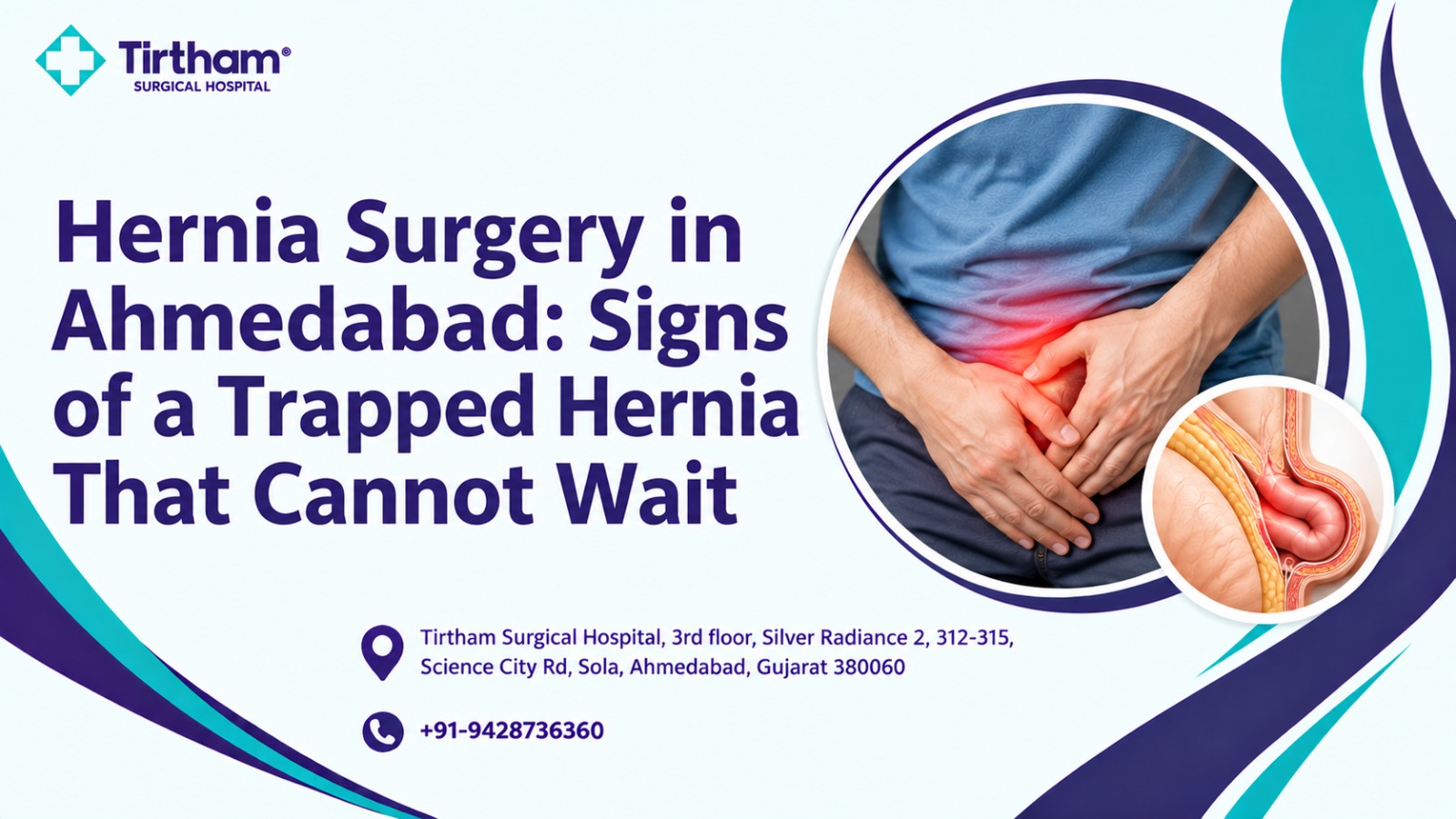
A hernia happens when fat or a loop of intestine pushes out through a weak area in the belly wall. In a normal hernia, this bulge can slip back in, especially when you lie down. Doctors call this a reducible hernia. You can read the basics on our page about hernia surgery in Ahmedabad.
A hernia becomes trapped when the bulge gets stuck outside and cannot be pushed back. The gap in the muscle wall is narrow, and the tissue that came through becomes swollen.
Why a trapped hernia is dangerous
Two problems can follow:
- The bowel gets blocked. Food, gas and stool cannot pass, causing vomiting and a swollen belly. This can lead to bowel obstruction.
- The blood supply gets cut off. This is called strangulation. Without blood, the trapped tissue can start to die, which can lead to a serious infection.
These problems can start within hours, which is why time matters so much.
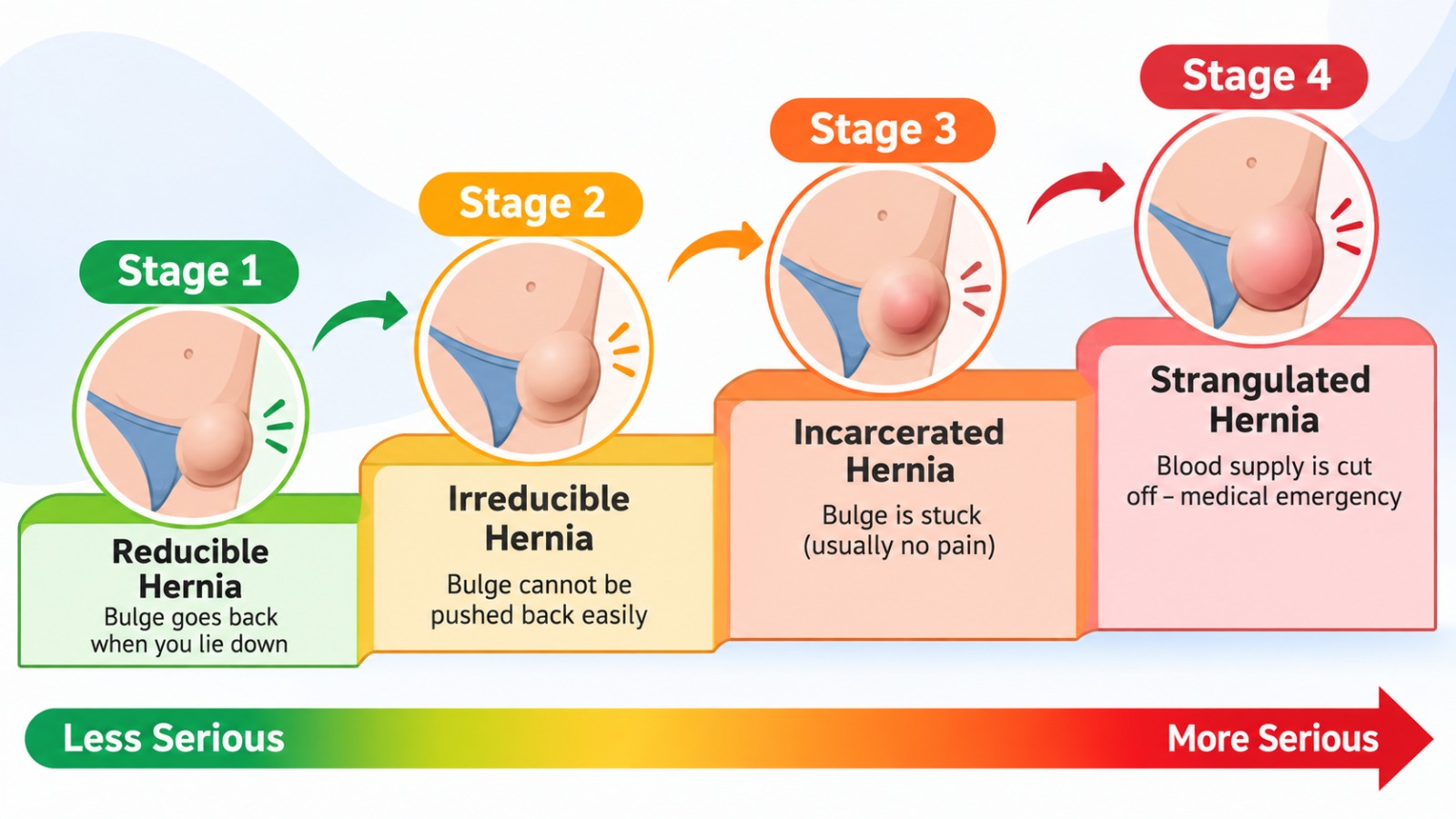
From a Soft Bulge to an Emergency: Four Stages
Not every stuck hernia is an emergency at the same moment. This table shows how the picture changes.
| Stage | What Is Happening | Common Signs | What to Do |
| Reducible hernia | The bulge goes back in | Soft bulge, little or no pain | See a surgeon to plan treatment |
| Incarcerated (stuck) hernia | The bulge cannot be pushed back | Bulge stays out, tender | Get medical care the same day |
| Obstructed hernia | The bowel inside is blocked | Vomiting, swollen belly, no gas or stool, colicky pain | Go to an emergency facility |
| Strangulated hernia | Blood supply is cut off | Hard, very painful, red or dark bulge, fever, feeling very unwell | Emergency surgery |
The table is a guide, not a way to diagnose yourself. If you are unsure, treat it as urgent.
Warning Signs That Cannot Wait
Go to an emergency hospital without delay if you notice any of these along with a hernia bulge:
- A bulge that is hard and will not go back in
- Severe pain that keeps getting worse
- Redness, a purple colour or a dark colour over the bulge
- Repeated vomiting
- A swollen, tight belly
- No passing of gas or stool
- Fever or chills
- Feeling very weak, dizzy or unwell
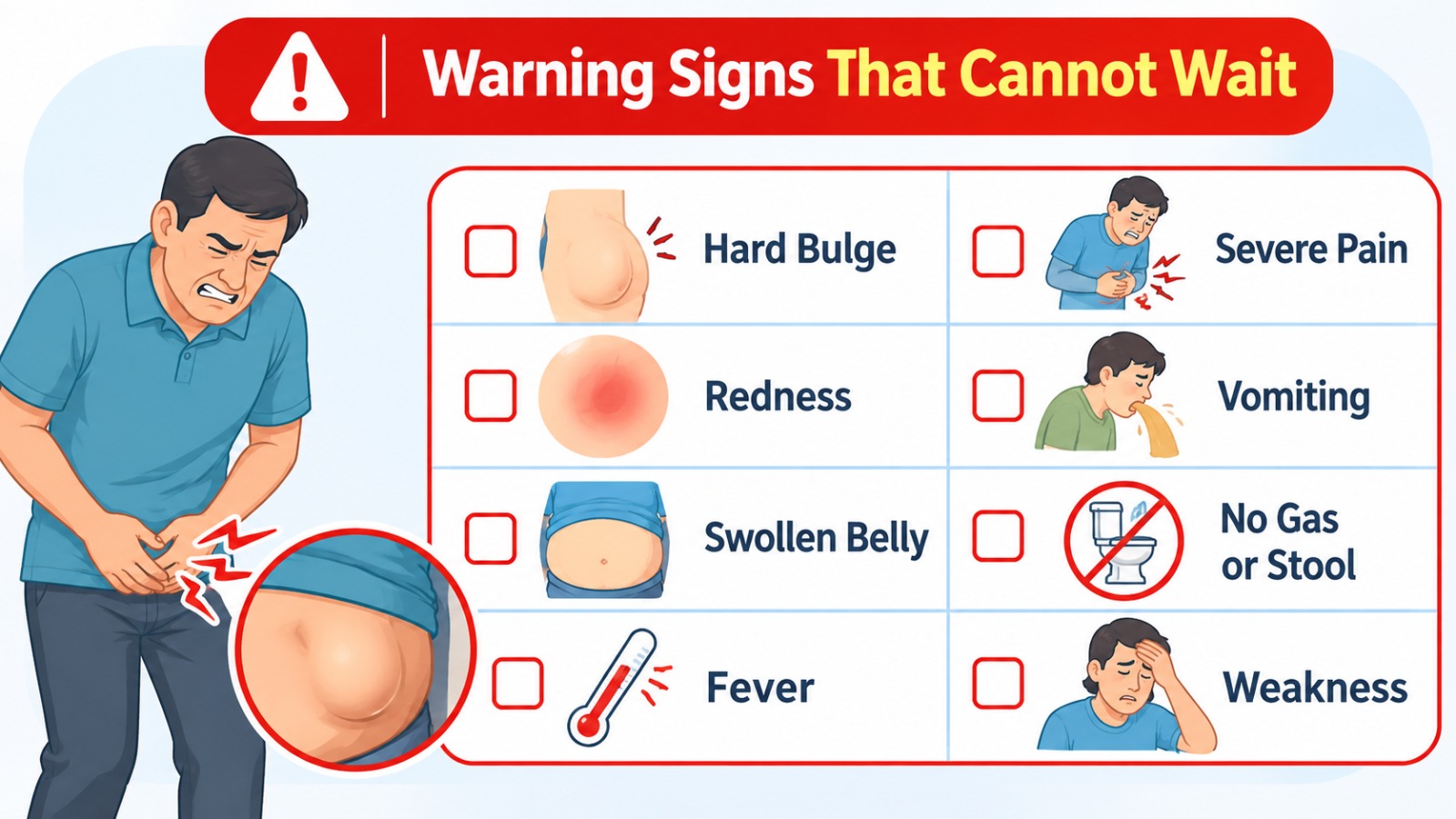
Even one or two of these can be serious. Do not wait to see whether the pain settles by morning.
One more thing to remember: older people and people with long-standing hernias may have less pain than expected. Do not judge the danger by pain alone.
Which Hernias Are More Likely to Get Trapped?
| Hernia Type | Where It Is | Risk of Getting Trapped |
| Femoral hernia | Upper thigh, just below the groin crease | Higher, so repair is usually advised even when symptoms are mild |
| Inguinal hernia | Groin, may reach the scrotum | Present, and often rises as the hernia grows or becomes harder to push back |
| Umbilical or paraumbilical hernia | At or near the navel | Present, mainly in adults with a narrow gap |
| Incisional hernia | At the scar of an old operation | Present, and larger hernias can have more than one gap |
Femoral hernias are more common in women and can be mistaken for something else. Our article on hernia in women explains why symptoms are often missed.
Straining raises the risk: long-standing cough, constipation, heavy lifting and difficulty passing urine all push on the belly wall.
What to Do While Going to the Hospital
When a hernia turns painful and stuck, how you act in the first hour can matter. Keep these points in mind:
- Do go to a hospital with a 24-hour emergency surgical team, and ask someone to take you
- Do lie down in a comfortable position and stay calm
- Do tell the doctor when the bulge got stuck, when the pain began and when you last ate
- Do not press hard or force the bulge back in if it is painful
- Do not eat or drink anything, in case you need surgery
- Do not take laxatives or heavy painkillers before the doctor sees you
- Do not massage or apply heat to the bulge
If a soft, painless bulge goes back in easily when you lie down, you can wait for a planned visit. But if it is painful and stuck, do not try to fix it at home.
At Tirtham Surgical Hospital, the emergency team can be reached 24 hours a day on +91-9428736360.
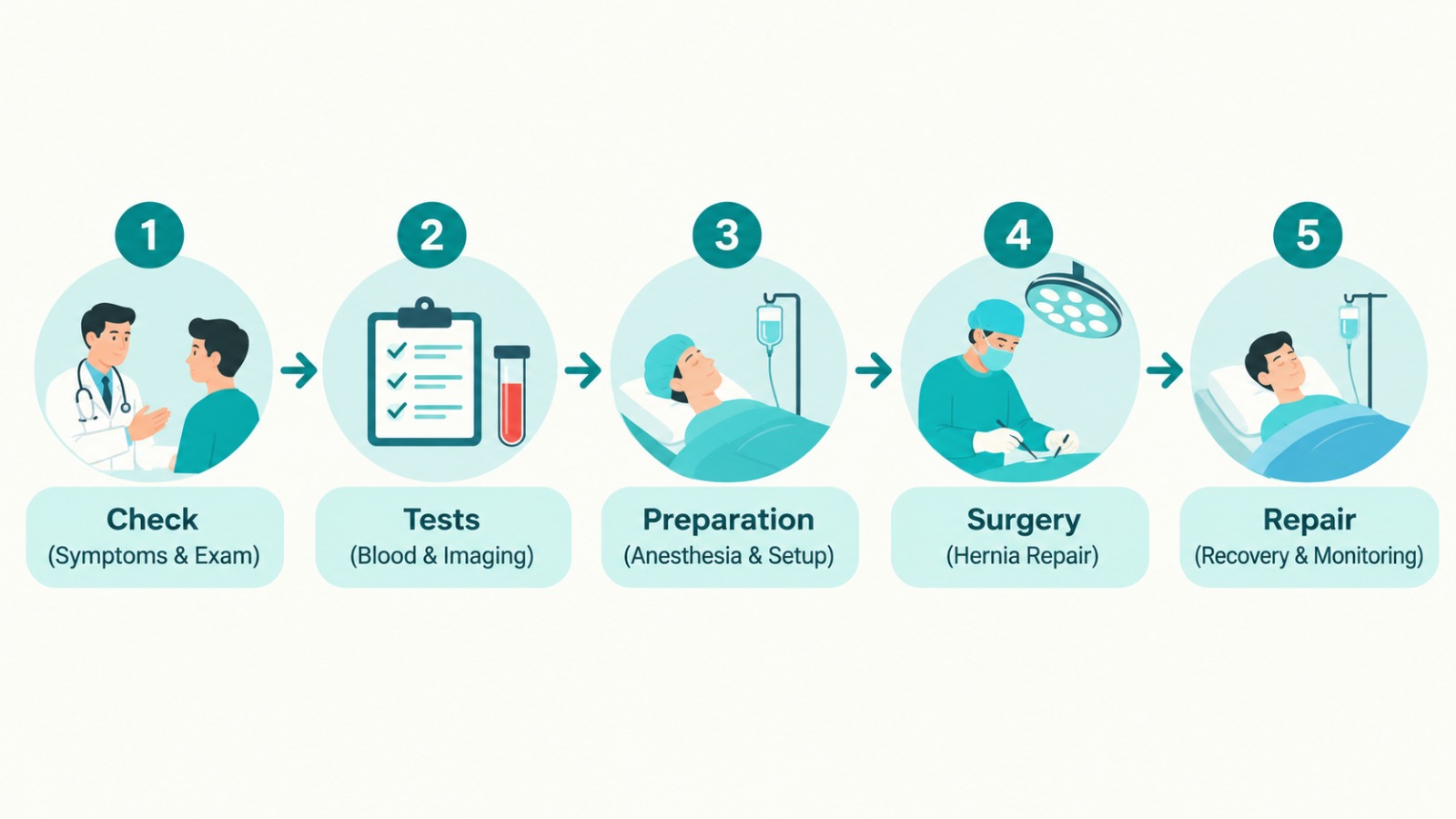
What Happens at the Hospital?
| Step | What the Doctor Does | Why It Matters |
| Quick check | Asks about symptoms and examines the bulge and belly | Shows how serious the hernia is |
| Tests | May order blood tests, an ultrasound or a CT scan | Show the contents of the hernia and any blockage |
| Preparation | Gives fluids, pain relief and keeps you without food | Gets you ready for safe surgery |
| Surgery | Frees the trapped tissue and checks its blood supply | Decides if the tissue is healthy |
| Repair | Closes the gap and may place a mesh, depending on what is found | Lowers the chance of the hernia returning |
If the intestine is damaged, that part may need to be removed and the healthy ends joined together. The decision about mesh in an emergency depends on what the surgeon finds during the operation. If you want to understand mesh better, read our guide on hernia mesh surgery.
Emergency Surgery vs Planned Surgery
A planned hernia repair is usually simpler. You come when you are ready, tests are done calmly, and the surgeon can choose the best technique, often a keyhole repair. You can read more in our guide to laparoscopic hernia repair.
Emergency surgery is done when the hernia is trapped and cannot wait. The operation can be longer, the hospital stay may be longer, and the recovery is usually slower. This is the main reason many surgeons suggest planned repair before a hernia gets stuck.
How to Lower the Chance of Reaching an Emergency
You cannot stop a hernia from existing, but you can lower the chance of a crisis:
- Get any bulge checked, even if it does not hurt
- Ask your surgeon whether watching or repairing is right for you
- Repair a femoral hernia early, as advised, even when it seems small
- Treat long-standing cough, constipation and urinary difficulty
- Avoid heavy lifting and straining while the hernia is still there
- Remember that a hernia belt may ease discomfort, but it does not repair the hernia or prevent a trapped hernia
If you are not sure about the type of hernia, our page on advanced hernia surgery in Ahmedabad explains how different hernias are handled.
Recovery After Emergency Hernia Surgery
Recovery depends on what was done. If the bowel was healthy, recovery is much like after planned surgery. If part of the bowel was removed, the stay is longer. Your surgeon will guide you on food, walking and wound care. Return at once for fever, a leaking wound, worsening pain, repeated vomiting or a swollen belly.
Frequently asked questions
What are the signs of a trapped hernia?+
Can a trapped hernia go back in by itself?+
What is the difference between an incarcerated and a strangulated hernia?+
How long can a trapped hernia wait for surgery?+
Is a hernia always painful when it is strangulated?+
Can I push a painful hernia back in myself?+
Conclusion
A trapped hernia is not a problem to wait out. A hard, painful bulge that will not go back, with vomiting, a swollen belly or fever, is a medical emergency, and the earlier you reach a hospital, the better the chances of a safe recovery. The best protection is a calm one: get any hernia checked, know the warning signs and plan the repair before it becomes urgent. If you have a hernia and want to know your own risk, you can contact us to book a consultation with Dr. Alpesh Patel. At Tirtham Surgical Hospital, we keep an emergency operating team ready around the clock, so a trapped hernia is treated without delay.
Next step
Plan your consultation
Share your reports on WhatsApp for a guided opinion, or visit us on Science City Road for an in-person examination.