
Piles, also known as hemorrhoids, are common, but the discomfort can be real. Bleeding while passing stool, itching, swelling, pain, or a lump around the anus can make sitting, working, travelling, and using the toilet stressful.
Many people postpone consultation because of embarrassment or assume home remedies will be enough. The reality is that piles can range from mild symptoms that improve with bowel-habit changes to advanced hemorrhoids that may need a procedure or surgery.
For someone searching for a Piles Hospital in Ahmedabad, the important question is where the condition can be assessed and care matched to its severity.
What Are Piles and Why Do They Happen?
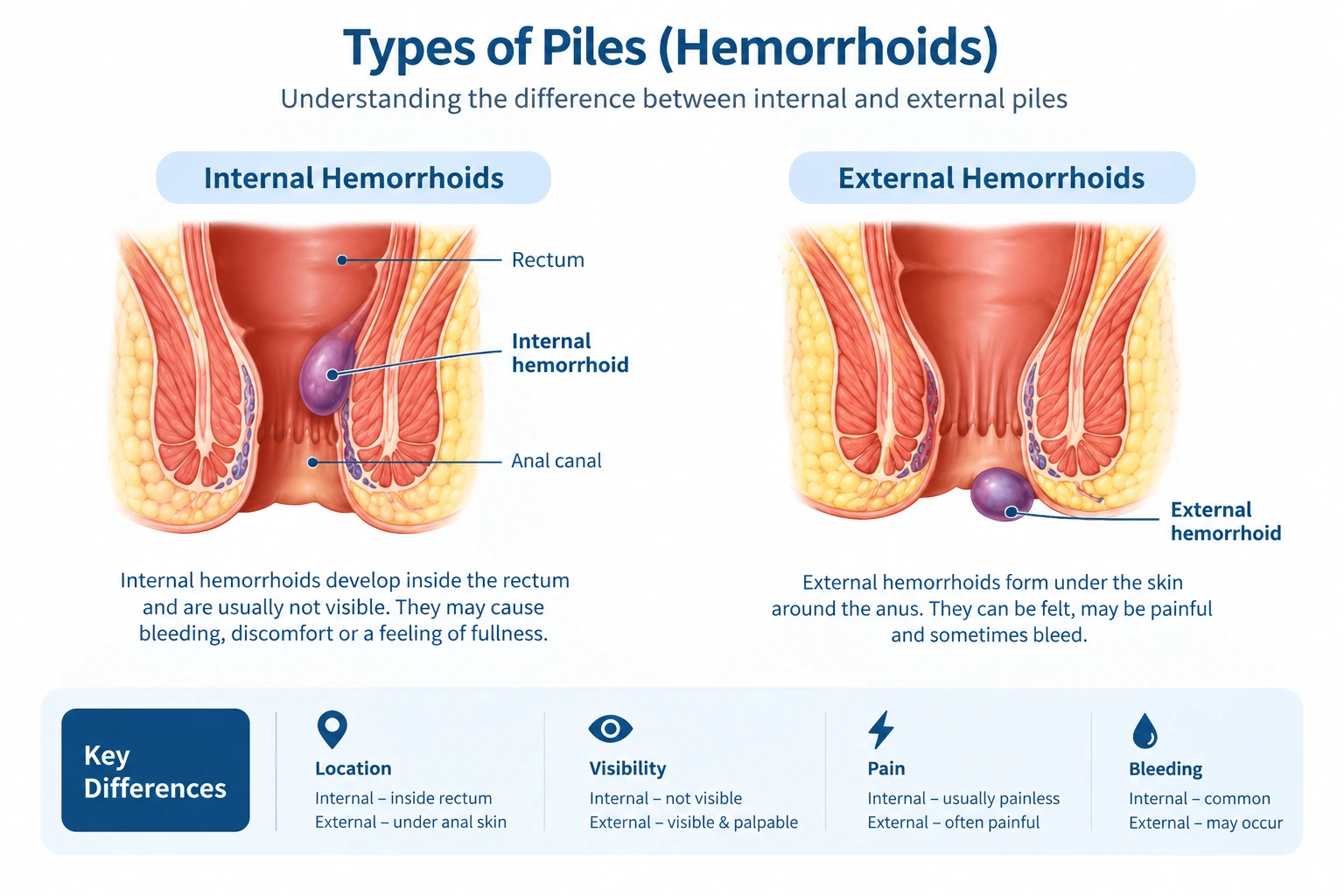
Piles are swollen tissues and blood vessels in the anal and lower rectal area. They are generally described as internal or external hemorrhoids.
Internal piles develop inside the anal canal and may cause bright-red bleeding or tissue that comes out during bowel movements. External piles develop under the skin around the anus and can become particularly painful when a blood clot forms.
Common factors include:
- Constipation, hard stools, and repeated straining.
- A low-fibre diet and inadequate fluid intake.
- Spending too much time sitting on the toilet.
- Pregnancy, excess weight, persistent diarrhoea, or repeated heavy lifting.
- Changes in the supporting tissues around the anus with age.
Not every episode of rectal bleeding is caused by piles. Fissures, fistulas, polyps, and other conditions can produce similar symptoms, so diagnosis matters.
Common Symptoms That Should Not Be Ignored
Symptoms vary. Some patients mainly notice bleeding, while others have pain, swelling, itching, or prolapse.
| Symptom | What a patient may notice | When evaluation is important |
| Rectal bleeding | Bright-red blood during or after stool | Repeated, heavy, or unexplained bleeding |
| Pain | Discomfort while sitting or passing stool | Severe, sudden, or persistent pain |
| Itching | Irritation around the anus | Symptoms that keep returning |
| Lump or swelling | Tissue felt around the anal opening | Increasing size or tenderness |
| Prolapse | Tissue coming out during bowel movements | It remains outside or needs manual pushing |
If bleeding is heavy, you feel faint or unusually weak, or pain and swelling become severe, seek medical attention.
When Should You Visit a Piles Hospital in Ahmedabad?
Consider an evaluation when symptoms keep returning or start affecting normal life. Visiting a piles specialist does not mean you automatically need surgery. A consultation can clarify the diagnosis and whether non-surgical care may be enough.
You should consider seeing a doctor when:
- Bleeding happens repeatedly.
- Pain or swelling affects work, sitting, walking, or sleep.
- A lump repeatedly comes out during bowel movements.
- Home measures have not improved the problem.
- Constipation and straining keep returning.
- You are unsure whether the problem is piles, fissure, fistula, or another condition.
A useful consultation should leave you with a diagnosis and treatment plan.
How Are Piles Diagnosed?
Diagnosis usually starts with questions about symptoms, bowel habits, previous episodes, medicines, and relevant medical history. The doctor may then examine the area around the anus.
Depending on symptoms, examination may include a digital rectal examination or proctoscopy. Further investigation may be recommended when bleeding needs another explanation or another colorectal condition needs to be ruled out.
Rectal bleeding should not automatically be attributed to hemorrhoids. Tirtham’s anorectal surgery service covers piles as well as fissures, fistulas, and pilonidal sinus, reflecting why similar symptoms sometimes need to be differentiated during assessment.
You can also explore Anorectal Surgery in Ahmedabad for information about conditions affecting the anus and rectum.
Piles Treatment: Does Everyone Need Surgery?
No. Treatment depends on the type, grade, symptoms, duration, and response to earlier care.
Conservative Treatment
Milder piles may improve when constipation and straining are addressed. Depending on the individual case, a doctor may recommend more dietary fibre, suitable fluid intake, regular physical activity, better toilet habits, medicines, or topical treatment.
These changes can reduce factors linked with recurrence.
Minimally Invasive Procedures
When symptoms continue, selected internal hemorrhoids may be treated with procedures such as rubber band ligation, sclerotherapy, or coagulation techniques. The option depends on the location and severity of the hemorrhoids.
Surgical Treatment
Large, advanced, prolapsing, recurrent, or complicated hemorrhoids may require surgery. The technique is selected according to the patient’s findings.
Therefore, Piles Surgery in Ahmedabad should follow proper assessment, not be treated as the automatic first choice.
| Treatment approach | Often considered when | Main purpose |
| Fibre, fluids and bowel-habit changes | Mild symptoms | Reduce constipation and straining |
| Medicines or topical care | Symptom control is needed | Reduce discomfort and irritation |
| Minimally invasive procedures | Selected internal piles | Treat problematic hemorrhoidal tissue |
| Surgery | Advanced or persistent cases | Treat hemorrhoids when simpler care is insufficient |
See Surgeries We Do, where piles are listed under anorectal surgeries.
How to Choose a Piles Doctor or Hospital in Ahmedabad
A search for a Piles Doctor in Ahmedabad can produce many clinics and hospitals. Look beyond headline claims and consider the consultation and treatment process.
Look for a hospital that provides:
- Proper diagnosis: Symptoms should be assessed instead of automatically being labelled as piles.
- Treatment choices: Conservative, minimally invasive, and surgical options should be considered when clinically appropriate.
- Relevant experience: Ask about experience with piles and other anorectal conditions.
- Clear communication: You should understand why a treatment is recommended and what recovery may involve.
- Follow-up care: Advice about bowel habits, medicines, wound care, and review should be part of the plan.
A Piles Surgeon in Ahmedabad should also explain why a particular procedure fits your condition instead of presenting one technique as suitable for everyone.
When comparing a Piles Specialist Doctor in Ahmedabad, the consultation matters. Clear discussion of diagnosis, alternatives, recovery, and complications helps you understand the next step.
What Can Recovery After Piles Treatment Look Like?
Recovery depends on treatment. Conservative care may allow a quick return to routine, while surgery can require more time and careful bowel and wound management.
| Recovery area | Typical guidance |
| Bowel movements | Avoid straining and follow the prescribed bowel-care plan |
| Diet | Include fibre-rich foods and maintain suitable fluid intake |
| Activity | Return gradually according to medical advice |
| Hygiene | Keep the area clean and follow wound-care instructions |
| Medicines | Take prescribed medicines as directed |
| Follow-up | Attend the scheduled review |
Pain, swelling, or bowel changes may occur after some procedures. Your surgeon should explain what is expected and when review is needed.